
Give every bidder the same Indianapolis property record
Start with the service address, building use, approximate height, floor count, occupied hours, ownership contact, facilities contact, and desired completion window. Attach labeled photographs of every elevation and close views of representative staining. A Downtown property near Monument Circle may need different operating notes from a suburban office, retail center, warehouse office, or hotel near the airport. Include available facade drawings, roof plans, loading rules, water-source locations, drainage observations, access restrictions, and prior cleaning records. Note events around Lucas Oil Stadium, the convention campus, or a hotel calendar when they could affect the work window.
Describe materials only when the property records support the description. Brick, mortar, precast, concrete, glass, metal, EIFS, stucco, painted surfaces, sealants, and roof-edge components require different compatibility decisions. Identify known leaks, open joints, loose coatings, repaired areas, and fragile surfaces. Ask bidders to state assumptions and identify any test area or investigation that must occur before final pricing. A shared information packet makes proposals more useful and keeps a vendor from being penalized for discovering a condition that the RFP failed to mention.
- Address, use, height, occupancy, contacts, operating hours, and target dates
- Labeled wide photographs plus close views of staining and sensitive details
- Known materials, repairs, leaks, previous methods, and excluded conditions
- Plans, water access, drainage observations, loading rules, events, and security requirements
Divide the building into service zones and define the outcome
A commercial property is not one surface. Define separate zones for storefronts, upper facade fields, glass bands, ledges, canopies, sign bands, parapets, roofline trim, loading areas, parking-facing walls, courtyards, and entrances. State which zones need a general appearance reset, organic-growth treatment, maintenance rinsing, contact glass cleaning, stain treatment, or inspection only. Specify how the result will be evaluated and what the contractor should document if a deposit or damaged finish cannot be removed by the proposed method.
This distinction matters in Indianapolis because lower elevations can collect road film, salt, tire spray, and landscaping debris while upper areas collect rain patterns, organic staining, and airborne soil. A hotel porte cochere may need a guest-ready presentation, while a warehouse wall may be judged primarily on broad visible improvement. A medical building may need careful coordination around entrances and intakes. Require each bidder to map the proposed method to each zone, including any place where a squeegee finish, scraping, mineral removal, coating work, or restoration is outside routine washing.
Ask for access details instead of an equipment slogan
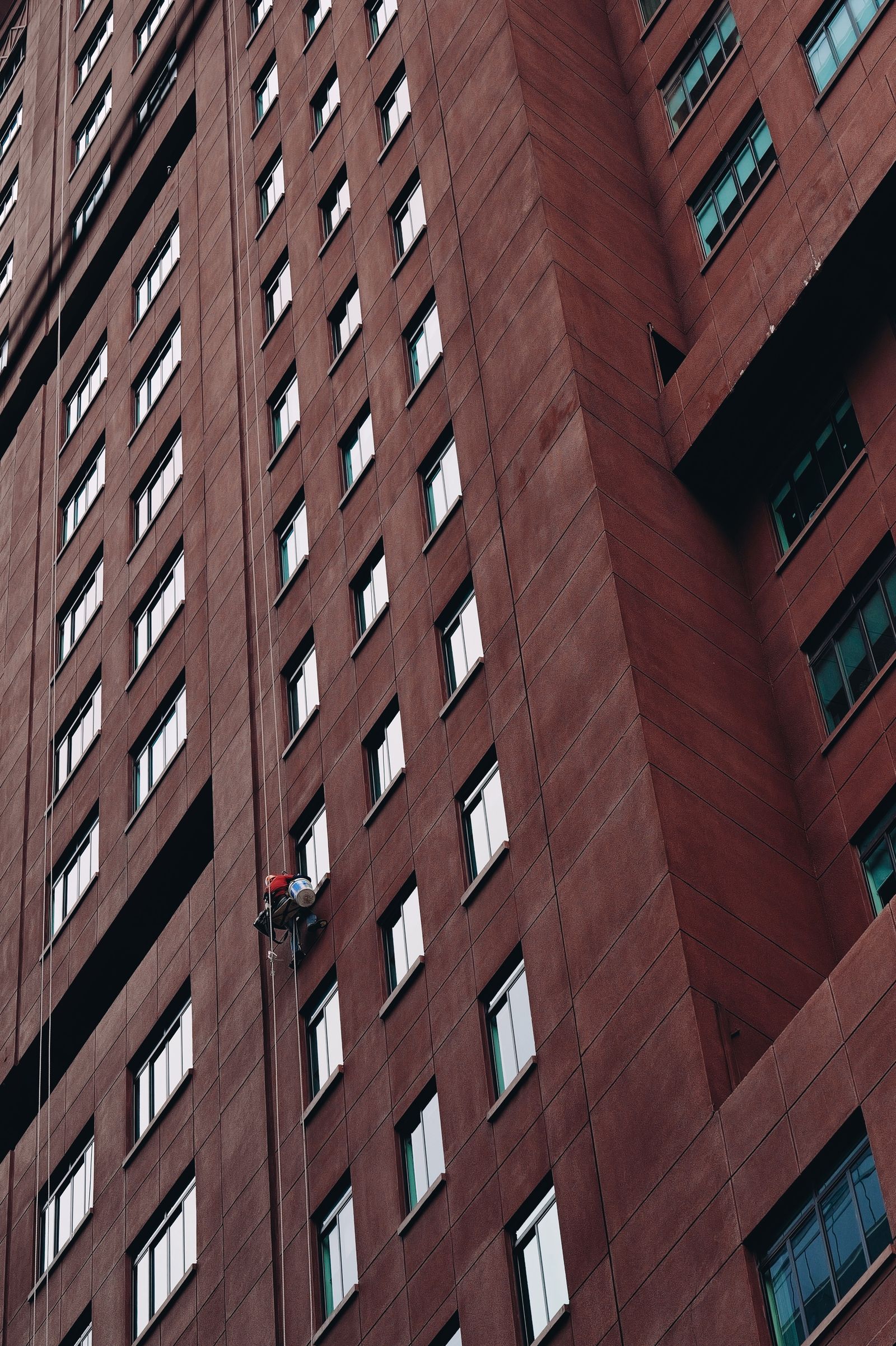
An RFP can invite drone-assisted cleaning without making it mandatory. Ask bidders to explain where a drone, lift, water-fed pole, roof-access system, hand detail, or hybrid plan is appropriate and why. The response should identify height, setbacks, launch or lift space, line of sight, wires, trees, balconies, rooftop equipment, neighboring property, public movement, hose routing, and the areas that still need contact access. The best answer may use more than one method across a single property.
For commercial drone work, the contractor should describe how FAA requirements and any needed airspace authorization will be addressed. Indianapolis International Airport, local aviation facilities, stadium activity, public gatherings, and temporary restrictions can affect feasibility. Ask the bidder to state what happens if flight conditions are not available on the planned date. A proposal that names a backup method, rescheduling trigger, and access assumption is more useful than one that presents a drone as a guaranteed solution for every window and ledge.
Specify occupied-site controls and the Indianapolis work window
The RFP should document tenant arrivals, guest check-in, breakfast, deliveries, outdoor seating, parking, loading, accessible routes, emergency access, school or medical operations, and event dates. A property near the convention corridor may be quiet one morning and heavily occupied during a conference. A building near a stadium may need an event blackout. A Broad Ripple retail frontage, a Mass Ave mixed-use block, and an office campus along Meridian can each have a different pedestrian pattern. Ask every bidder to describe how the work zone will be marked, how entrances will remain usable, and who can pause work when conditions change.
Weather controls belong in the same section. Require proposed limits for wind, lightning, precipitation, temperature, surface moisture, and visibility, plus a communication process for delay or rescheduling. Central Indiana heat can change dwell time, thunderstorms can alter water and flight conditions, and freezing weather can make walking surfaces unsafe. The RFP should allow the contractor to change the sequence or stop when conditions no longer support the agreed method. A reliable schedule is one that includes its decision rules, not one that pretends weather is irrelevant.
Make water management and closeout deliverables explicit
Ask bidders to identify the water source, expected flow or rinse approach, hose route, drainage path, storm inlets, landscaped areas, low points, vehicles, doors, equipment, public walks, and neighboring property. Require a description of how chemistry, soil load, and rinse water will be managed at the address. Depending on the scope, the plan may include protection, diversion, collection, reduced rinse volume, recovery, or another approved control. The contract should identify who confirms site requirements and what happens if the observed water path differs from the pre-job assumption.
Closeout should be a priced deliverable rather than an afterthought. Require a list of completed and deferred zones, representative before-and-after photographs, remaining conditions, areas needing contact access or repair, weather or access exceptions, water-control notes, and recommended next service timing. Ask for a consistent file naming or zone labeling system so the property team can compare future visits. This record is especially useful for multi-tenant offices, hotels, facilities portfolios, and owners who need to show what work was completed without relying on a contractor's verbal summary.
- State the water source, route, receiving areas, sensitive assets, and proposed controls.
- Require a work-zone, entrance, pedestrian, vehicle, and emergency-access plan.
- Request completed-zone photos, deferred areas, exceptions, and remaining-condition notes.
- Ask for a recommended maintenance cadence and any specialty referrals after the work.
Compare Indianapolis proposals with a consistent scoring sheet
Use the same questions for every bidder: What surfaces are included? What finish is expected? Which method is proposed for each zone? What is excluded? What access and water assumptions affect price? How will the contractor protect occupants, landscaping, equipment, and drainage? What weather or airspace conditions trigger a delay? What documentation arrives at closeout? A simple scoring sheet can separate technical fit, operating plan, experience with similar property types, communication, schedule, documentation, and total price. Price should be evaluated alongside the scope it represents, not as a standalone number.
Ask bidders to identify alternates separately: recurring maintenance, upper-glass rinsing, contact detailing, lift work, canopy or parapet cleaning, stain treatment, test areas, or repair referrals. This lets ownership choose a useful first phase without hiding required work inside a vague lump sum. Include a quote expiration date and assumptions about water, access, permits, public-space permissions, and building-provided coordination. The final agreement should attach the accepted zone map and closeout standard so the awarded scope remains clear after procurement is complete.